SUMMARY
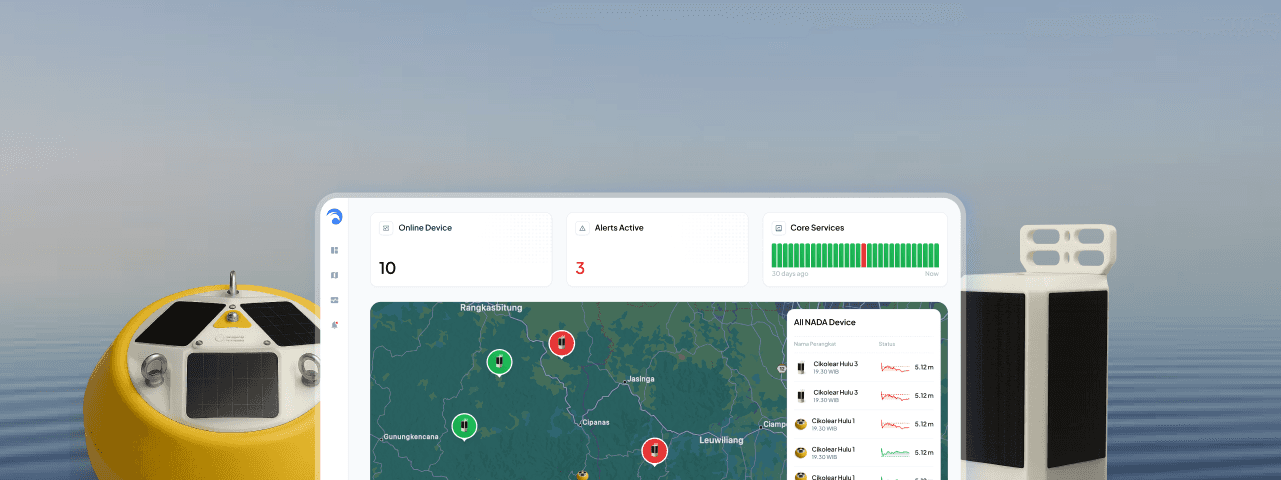
Redesigning NADA's Early Warning System for government disaster response
How I simplified a complex environmental monitoring platform to help government operators respond to critical alerts faster and with more confidence
🔒 Confidentiality notice
This project is covered under a non-disclosure agreement. Only a limited selection of screens is shown here. Proprietary data, client details, and internal workflows have been omitted. Full work available for discussion in a private setting.
PROBLEM
Critical data was hard to read under pressure
NADA provides a smart, integrated ecosystem observation platform used by government agencies to monitor environmental hazards including river water levels, flood alerts, and early warning indicators across multiple monitoring stations.
The existing Early Warning System (EWS) dashboard was built for data completeness, not usability. When an alert was triggered, operators had to manually sift through dense tables, inconsistent visual hierarchy, and fragmented status indicators to determine the severity and location of a threat. In high-stakes scenarios, every second of confusion has real-world consequences.
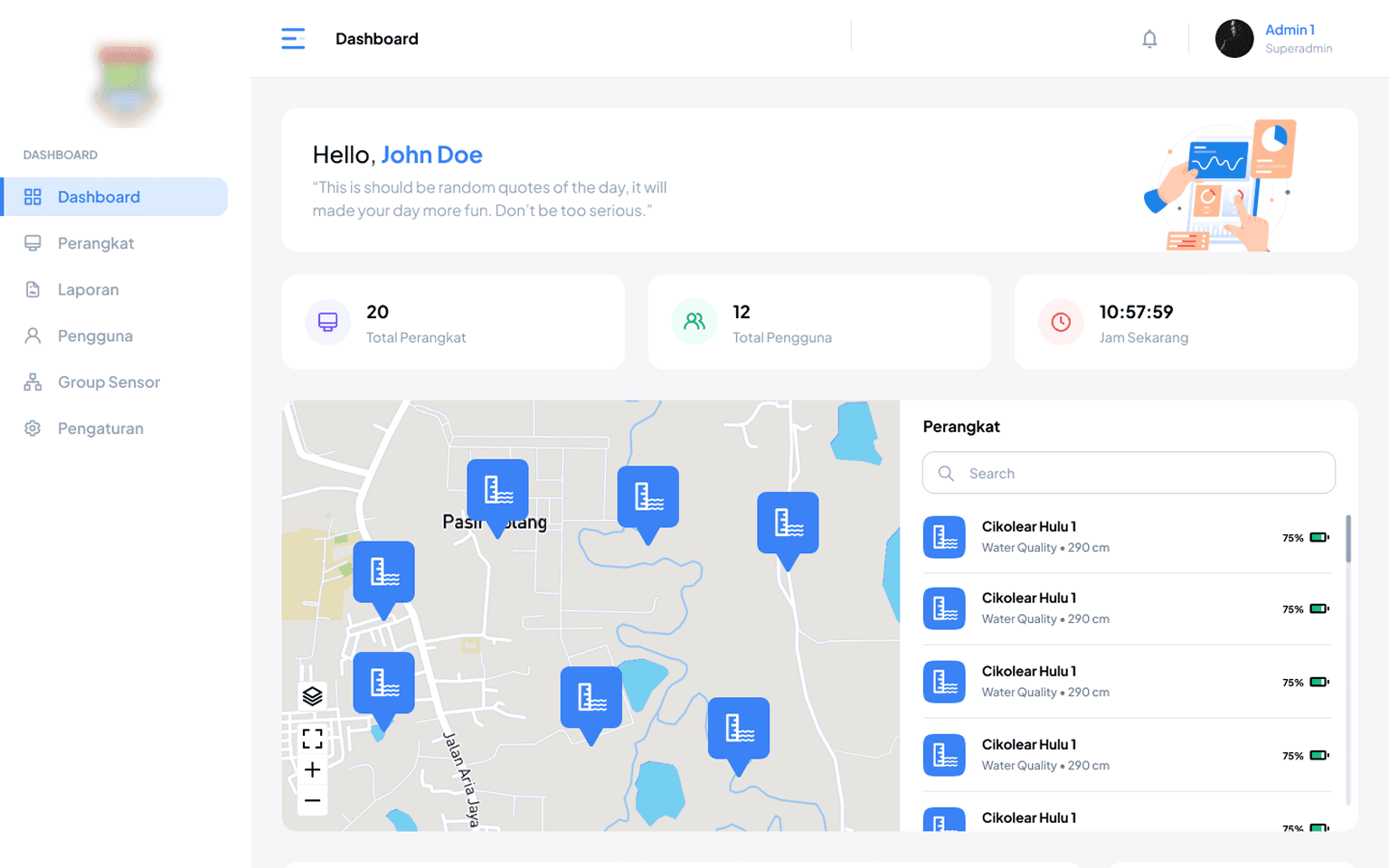
-Discovery insight from operator interviews
Core pain points
No visual alert hierarchy
critical, warning, and normal statuses looked the same
Data overload
all metrics shown at once with no prioritization
No spatial context
operators couldn't quickly locate which station was affected
Slow task flow
key workflows took ~5 minutes to complete
Design challenge
How do we transform a technically complete but cognitively overwhelming dashboard into an interface that allows government operators to identify, interpret, and respond to critical alerts in under 30 seconds?
IDEATE
From user frustration to structured design direction
I started by interviewing government operators and observing how they used the existing system during a simulated alert scenario. The sessions revealed a clear pattern: users were spending most of their time orienting figuring out where the problem was and how serious it was rather than acting on it.
From these findings, I defined three design principles to guide the redesign:
I then ran a design sprint starting with rapid sketches of 5 layout concepts, narrowing to 2 directions through internal critique with the engineering team, and settling on a map-plus-panel layout that gave operators both geographic context and metric detail in a single view.
PROTOTYPE & TEST
Testing under simulated pressure
I built a mid-fidelity prototype in Figma covering the three most critical workflows: viewing active alerts, drilling into a specific station's data, and accessing historical trend charts. The prototype was tested with 5 government operators in moderated usability sessions.
After two rounds of iteration, the prototype was handed off to engineering with annotated specs, a component library, and a documented interaction pattern for the alert state system. Collaborated closely with both engineers throughout to validate feasibility and ensure the design system translated cleanly into code.
IMPACT
Faster decisions, fewer errors, higher confidence
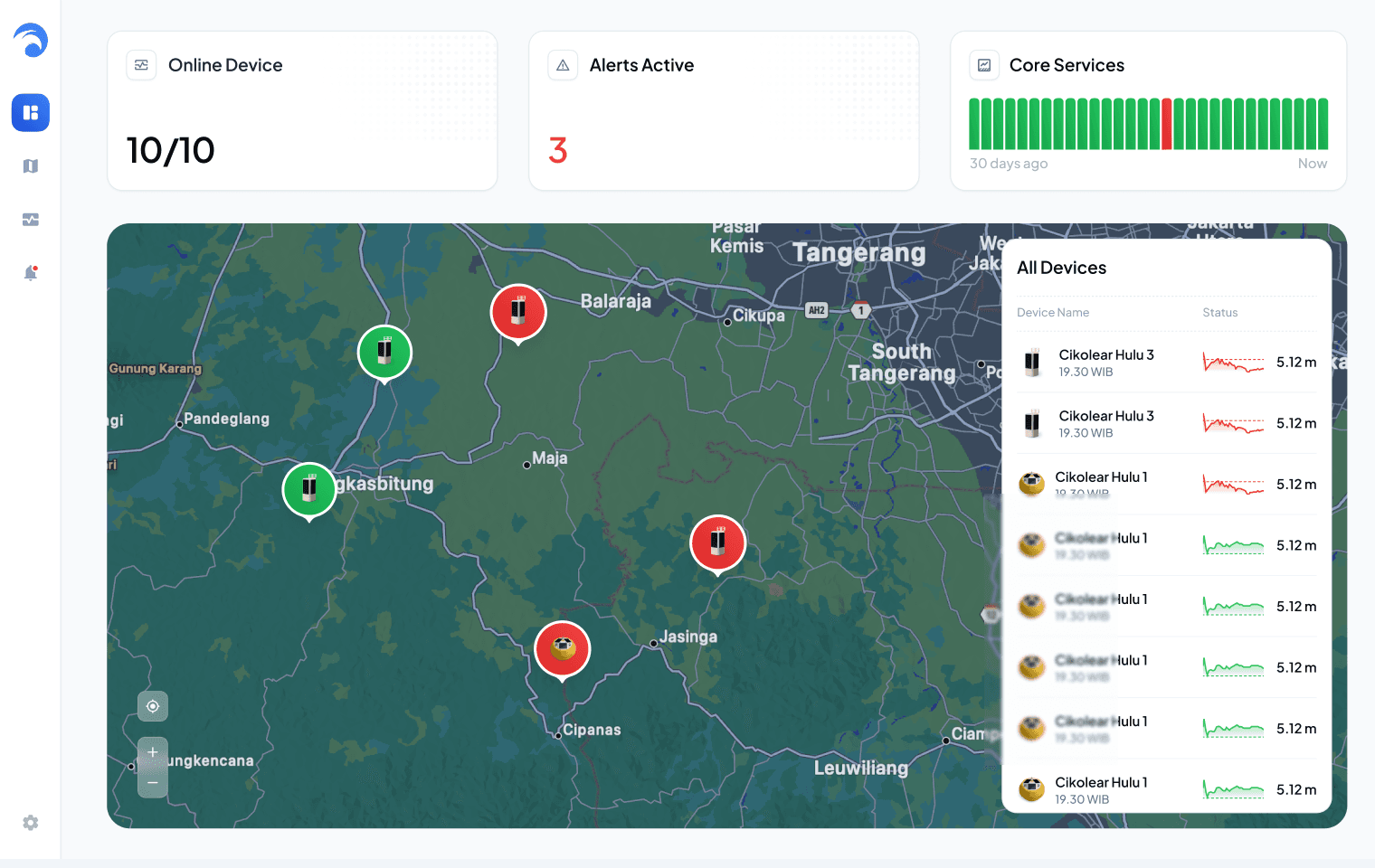
The redesigned Early Warning System was deployed to government clients. Post-launch usability evaluations and operator feedback showed measurable improvements across all key task flows.
What i shipped
Redesigned alert dashboard
with severity-coded status cards and map integration
Design Systems
covering all EWS states: critical, warning, normal, no-data, loading
Annotated handoff specs
co-reviewed with 2 engineers for implementation accuracy